Auto electrical

Automotive electrical troubleshooting in Calgary

A dead radio or an accessory that works only sometimes is the symptom, not the fault. The work is finding what is actually wrong before anyone starts replacing parts — and telling you plainly what we found.

  • Measured before parts

    We test the circuit rather than swapping components and hoping.

  • Accessory and aftermarket faults

    Audio, dash cam, remote starter and lighting wiring, whoever fitted it.

  • Intermittent issues investigated

    The faults that only happen sometimes are the ones worth doing properly.

  • You get the answer

    What is wrong, what it costs, and whether it is worth doing — before any repair starts.

What this is

Finding the fault is the actual work

Most electrical jobs that come to us have already had a part thrown at them. A fuse was replaced and blew again. A head unit was swapped and the problem followed it. A battery was replaced and the car still went flat.

That happens because a symptom names a circuit, not a component. A stereo with no power could be the head unit, but it is far more often a fuse, a ground, a connector or a wire that was tapped badly during a previous install. Until something is measured, replacing parts is guesswork with an invoice attached.

Our work here is twelve-volt and accessory electrical: car audio, dash cams, remote starters, lighting and the wiring around them, plus the factory circuits those systems connect to. We will tell you honestly when something falls outside what we do rather than take the vehicle in and work it out later.

Symptoms

What usually brings a vehicle in

Six patterns cover most of what we see. Yours is probably one of them.

No power

A radio, camera or accessory that is completely dead. Nothing lights up, nothing responds.

Intermittent power

It works, then it does not. Cuts out over bumps, resets itself, or comes back after a cold night.

Blown fuses

The fuse opens again shortly after being replaced. Something downstream is drawing more than the circuit allows.

Battery drain

The vehicle sits a few days and will not start. Something is staying awake when it should not be.

Noise or interference

Whine that rises with the engine, popping on start-up, or hiss through the speakers.

Lighting and accessory faults

Installed lighting or an accessory that does not switch, does not dim, or behaves differently than it should.

Diagnosis before parts

Measure first, then decide what to replace

This is the part of the job worth paying for. Everything after it is comparatively easy.

Which of those apply depends entirely on the symptom. A dead accessory and a battery that drains overnight are different investigations, and neither is a fixed checklist.

A ground is worth singling out. A connection that looks fine and even reads continuity can still drop enough voltage under load to make an amplifier cut out or a module behave strangely. That is what voltage-drop testing is for, and it is the step most often skipped.

We are describing how we work rather than publishing a repair guide. You will not find vehicle-specific wire colours, security or immobiliser wiring, or fuse-jumping shortcuts on this page — those do not belong on a public site.

What a diagnosis involves

  • Confirming the complaint — seeing the fault ourselves rather than working from a description
  • Checking that the circuit has power, and that it has a proper ground
  • Voltage-drop testing where a connection is suspect but not obviously broken
  • Inspecting the fuse and the circuit it protects
  • Inspecting connectors for corrosion, spread pins and heat damage
  • Continuity checks along the wiring where a break is likely
  • Measuring current draw where something is consuming more than it should
  • Looking at the workmanship of any previous installation
  • Separating an aftermarket fault from a factory one
  • Reproducing an intermittent condition where that is possible

Something electrical not behaving?

Battery drain

Parasitic draw, and why it is methodical

The car sits three days and will not start. This is one of the most common jobs we take on, and one of the most commonly misdiagnosed — usually by replacing the battery first.

  • An accessory wired to the wrong source. Something taken from constant power that should have been on an ignition or accessory feed.
  • A module that will not go to sleep. Often because something is keeping it awake rather than because it has failed.
  • Faulty equipment. An accessory that has developed an internal fault and now draws when it should be off.
  • An incorrectly fitted hardwire kit. Common with dash cams, where the parking-mode side was wired without the protection it needs.
  • Damaged wiring. Chafed insulation, a corroded joint, or a connector letting moisture in.
  • A vehicle electrical fault unrelated to any accessory. It happens, and testing is what separates the two.

Every parked vehicle draws a small amount of current. Modules stay partly awake, clocks and alarms keep running, and the vehicle settles into a low-power state over a period of minutes after you walk away. A problem exists when that settled draw is higher than it should be for that vehicle.

There is no single number that counts as normal. What is acceptable on a fifteen-year-old truck is not what is acceptable on a new SUV full of modules, so the figure has to be judged against the vehicle rather than a rule of thumb from the internet.

Excessive draw usually comes from one of these:

Finding it means measuring the draw with everything off and the vehicle asleep, then isolating circuits one at a time until the number moves. It takes as long as it takes — which is why it is charged for the time rather than as a fixed job.

Intermittent faults

The ones that only happen sometimes

A fault that is present all the time is comparatively easy: it can be measured whenever you like. A fault that appears twice a week, only when it is cold, or only over a particular bump is a different job.

Loose or partly seated connector

Works until movement or vibration breaks the contact, then works again.

Weak ground

Fine at low current, drops voltage under load. Often the cause of an amplifier that cuts out only when it is working hard.

Corrosion

Calgary winters and road salt. A joint that reads fine in the summer stops behaving in February.

Damaged wire

Chafed against an edge or pinched behind trim during a previous install. Intermittent until it is not.

Temperature-related

Appears only when cold or only once things have warmed up, which narrows the search considerably.

Module communication

Something on the vehicle network dropping out, which can make several unrelated things misbehave at once.

Being straight about this: an intermittent fault sometimes needs more diagnostic time, because it has to be reproduced before it can be measured. If yours only appears under specific conditions, tell us what those are when you book — it genuinely shortens the job.

The wiring behind what we install
Accessory wiring

The wiring behind what we install

Most of the electrical work we do sits behind the accessories this shop fits every day, so the faults are familiar ones.

  • Head unit and amplifier power. No power, dropping out, or shutting down when the volume goes up — usually supply, ground or a remote-turn-on lead.
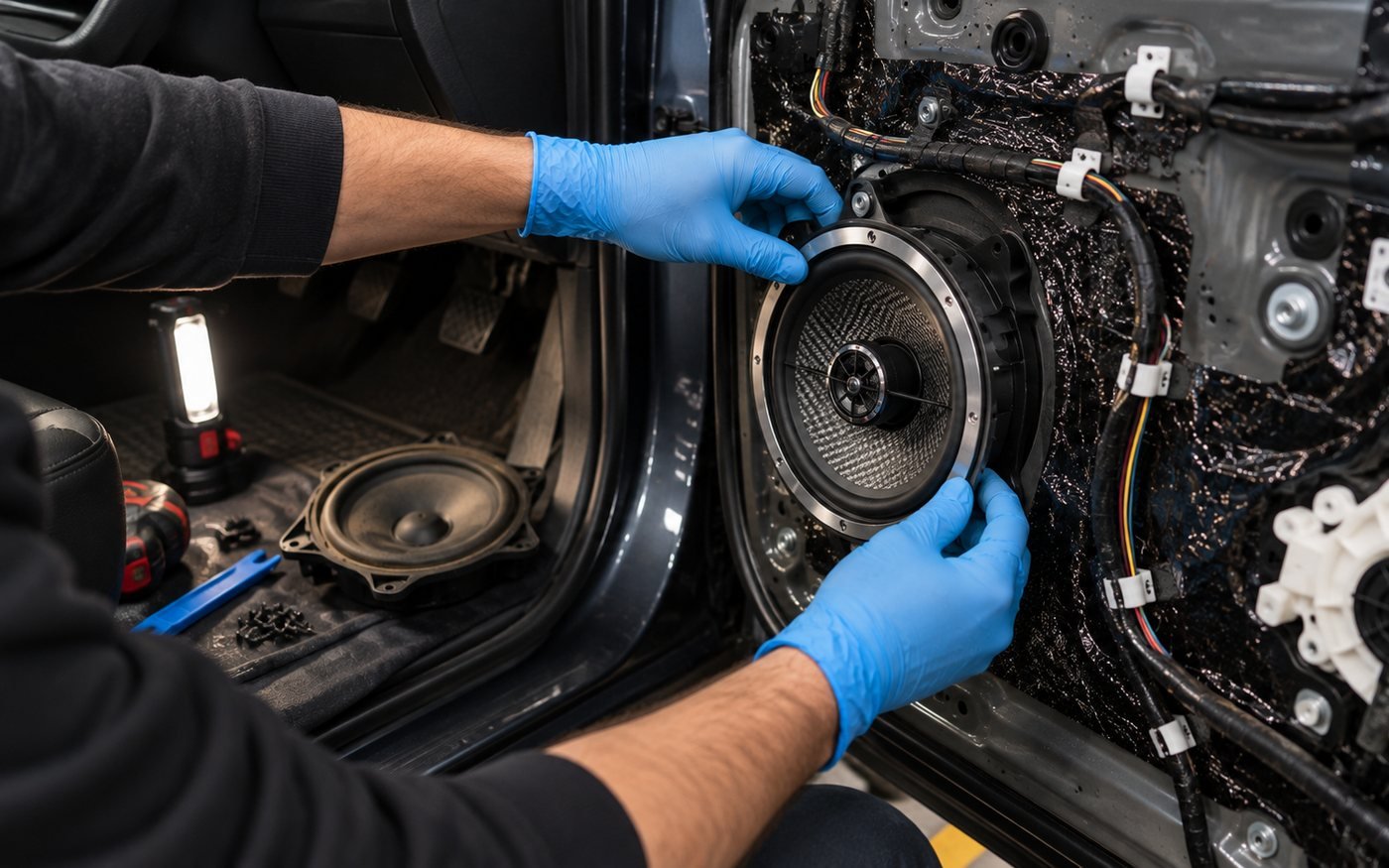
  • Speaker and audio wiring. A channel missing, a speaker cutting out, or a wire damaged behind a door card.
  • Noise and interference. Alternator whine, ground loops and popping on start-up, which are wiring problems rather than equipment problems more often than people expect.
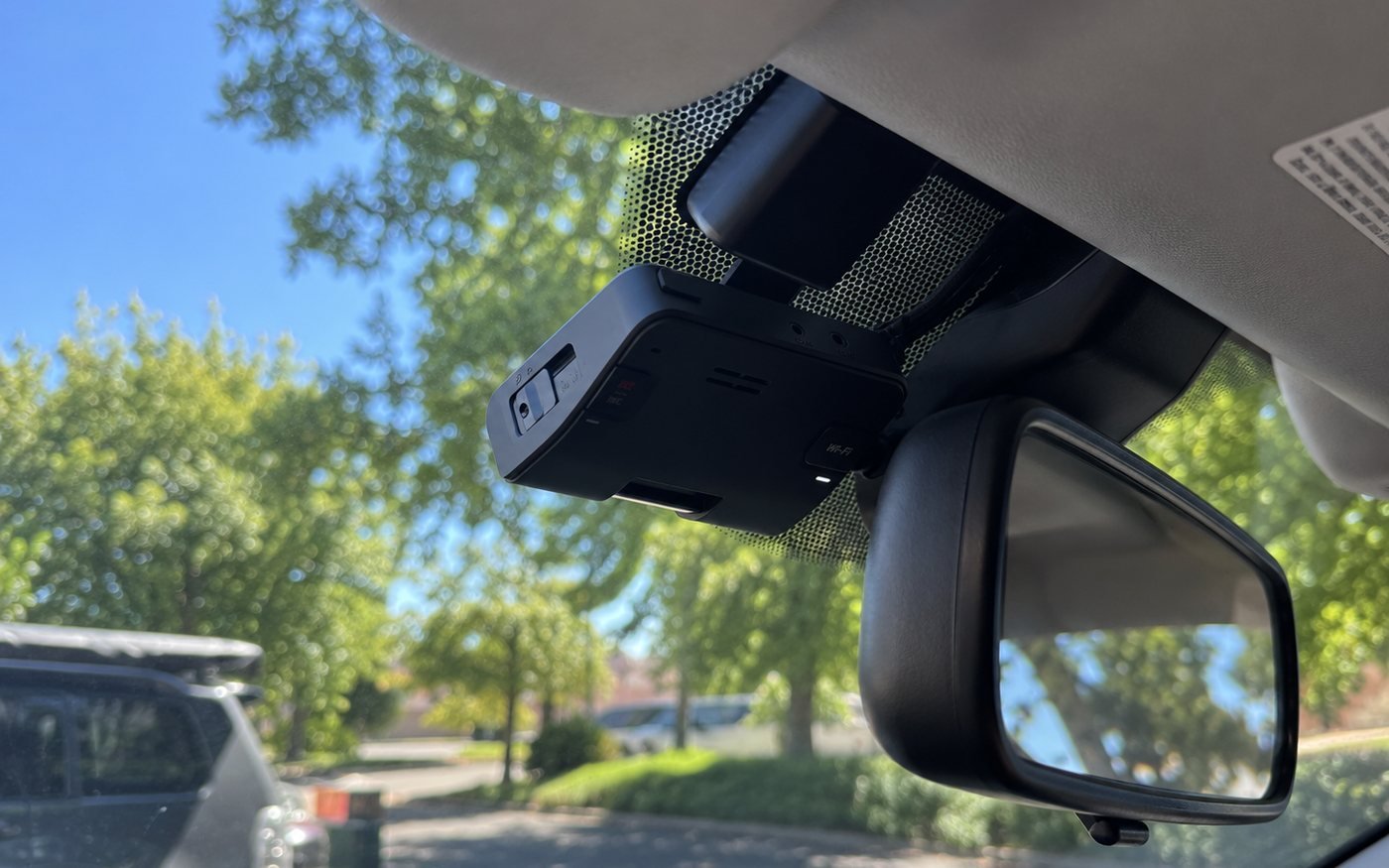
  • Dash cam hardwiring. Cameras that will not stay on, parking mode not behaving, or a kit fitted without the protection it needed.
  • Remote starter wiring. Corroded hood switches, badly tapped brake wires and interface modules that were never configured for the vehicle.
  • Lighting and accessory circuits. Installed lighting that will not switch, dims incorrectly or draws more than the circuit it was put on.

We also look at factory circuits these systems connect to — the accessory feeds, door and lock circuits, and the fuse panel work behind them — because an aftermarket fault and a factory one often present identically until something is measured.

Sometimes it is not the accessory at all
Battery and voltage

Sometimes it is not the accessory at all

A surprising share of “electrical” symptoms come back to supply. Low system voltage makes well-installed equipment behave badly, and it does it in ways that look like a fault in the equipment.

What we are describing here is testing and diagnosis on the supply side, so you know whether the problem is the battery, the connections, the charging system or the accessory. Where the answer is a mechanical repair beyond twelve-volt and accessory work, we will tell you that plainly rather than take it on.

What we check on the supply side

Battery condition and whether it is holding charge; system voltage with the engine running; terminals, clamps and main ground connections for corrosion and tightness; and whether the charging system is delivering what it should.

If your vehicle cranks slowly on a cold morning, that is worth resolving before adding anything that puts more demand on the battery — a remote starter or a parking-mode dash cam will find a weak battery quickly.

Installations fitted somewhere else
Work done elsewhere

Installations fitted somewhere else

We inspect and correct accessory installations carried out by other shops, including ones that have since closed. It is a regular part of the work and there is nothing awkward about bringing it in.

  • A ground made to painted metal or to a point not intended to carry it
  • Connections that were twisted or taped rather than made properly, and have worked loose
  • A wire tapped into the wrong circuit — constant power where it should have been switched, or a circuit already near its limit
  • Wiring left exposed, unsecured, or run where it can chafe
  • Fuse problems — missing, wrong rating, or fitted in the wrong place in the circuit
  • An interface module never configured for the specific vehicle
  • An accessory that will not shut down when the vehicle does
  • Noise or interference introduced by how the equipment was wired

The recurring findings are consistent, and none of them are exotic:

None of this is about running down whoever did the work — some of it is age, some is a rushed afternoon. We will tell you what we find, what it takes to put right, and whether rewiring it properly or replacing the unit is the better use of your money.

How it goes

What happens when you bring it in

Confirm the symptom

We see the fault ourselves. If it is intermittent, we agree what triggers it and how long it is reasonable to spend reproducing it.

Inspect and measure

Power, ground, fuses, connectors and current draw — whichever the symptom calls for, tested rather than assumed.

Isolate the fault

Narrow it to a circuit and then to a cause, and establish whether it is an aftermarket problem or a factory one.

Explain the options

What is wrong, what it takes to put right, what it costs, and whether it is worth doing on that vehicle. You decide before any repair starts.

Worth saying plainly: not every diagnosis ends in a same-visit repair. Some faults need a part ordered, and some need more time once we know where to look. You will hear that from us at the point we know it, not at pickup. Open Monday to Saturday, 10:30 a.m. to 6:30 p.m.

Why it matters

What you are actually paying for

Electrical troubleshooting is charged for the time it takes to find the fault, because finding it is the work. Replacing the part afterwards is usually the quick bit.

You get an answer

What is wrong, what it costs to fix, and an honest view on whether it is worth doing on that vehicle.

You approve before we repair

Nothing beyond the diagnosis happens without you agreeing to it first.

The diagnosis is yours

If you would rather have the repair done elsewhere, that is fine. You paid for the answer and you can take it with you.

Fewer parts replaced

Measuring first is what stops a job turning into a sequence of parts that each did not fix it.

Questions

Electrical questions we get asked

Why did my radio suddenly stop working?

Most often a fuse, a ground, a connector or a supply wire rather than the head unit itself — particularly if anything has been installed or removed recently. Testing tells you which, and it is a much cheaper answer than a new unit.

Why does my accessory work sometimes but not always?

Intermittent faults usually come down to a loose connector, a weak ground, corrosion, or a wire damaged behind trim. They need to be reproduced before they can be measured, which is why they sometimes take longer than a fault that is present constantly.

Why does the same fuse keep blowing?

Because something downstream is drawing more current than that circuit allows. Fitting a larger fuse is the wrong answer and a genuinely dangerous one — the fuse is protecting the wiring. The right answer is finding what is pulling the extra current.

What is a parasitic battery draw?

Current the vehicle keeps drawing after it is parked and asleep. A small amount is normal and varies by vehicle, so there is no single figure that counts as correct. Excessive draw is found by measuring it and isolating circuits until the number changes.

My battery keeps dying. Is it the battery or something else?

It can be either, and testing is what separates them. We check the battery, the terminals and grounds, system voltage and whether the charging system is delivering properly, before assuming an accessory is at fault.

Can you diagnose wiring another shop installed?

Yes, and it is a regular job. Badly wired stereos, cameras, lighting and starters come in often, including from shops that have since closed. We will tell you what we find without making a drama of it.

Can you repair damaged accessory wiring rather than replacing the unit?

Usually. Rewiring an installation properly is a large part of what we do. Where the equipment itself has failed we will say so, and where rewiring is the better value we will say that instead.

Why is there a whine or buzz through my speakers?

Noise that rises with engine speed is usually a wiring or grounding problem rather than a faulty amplifier or head unit — often a ground loop or a signal cable routed alongside a power cable. It is fixable once it is traced.

How long does a diagnosis take?

It depends on the symptom. A dead accessory is often quick. A parasitic draw or an intermittent fault takes longer because the vehicle has to be measured in the right state, or the fault reproduced. We will give you a realistic expectation when you book.

How is it priced?

Electrical troubleshooting is based on diagnostic time and complexity rather than a flat rate, because the work is the finding. We will be clear about what we expect before starting, and you approve any repair separately.

Tell us about your vehicle

Send the details and we will come back with a price for your vehicle. No call centre, no generic quote.

Tell us what it is doing, and when

Send us the year, make and model, what the symptom is, and whether anything was installed or worked on before it started. If it is intermittent, tell us what seems to trigger it — that detail genuinely shortens the job.

#129 10985 38 St NE, Calgary AB T3N 1E7 · Monday to Saturday, 10:30 a.m.–6:30 p.m.