Ambient lighting

Ambient lighting installation in Calgary

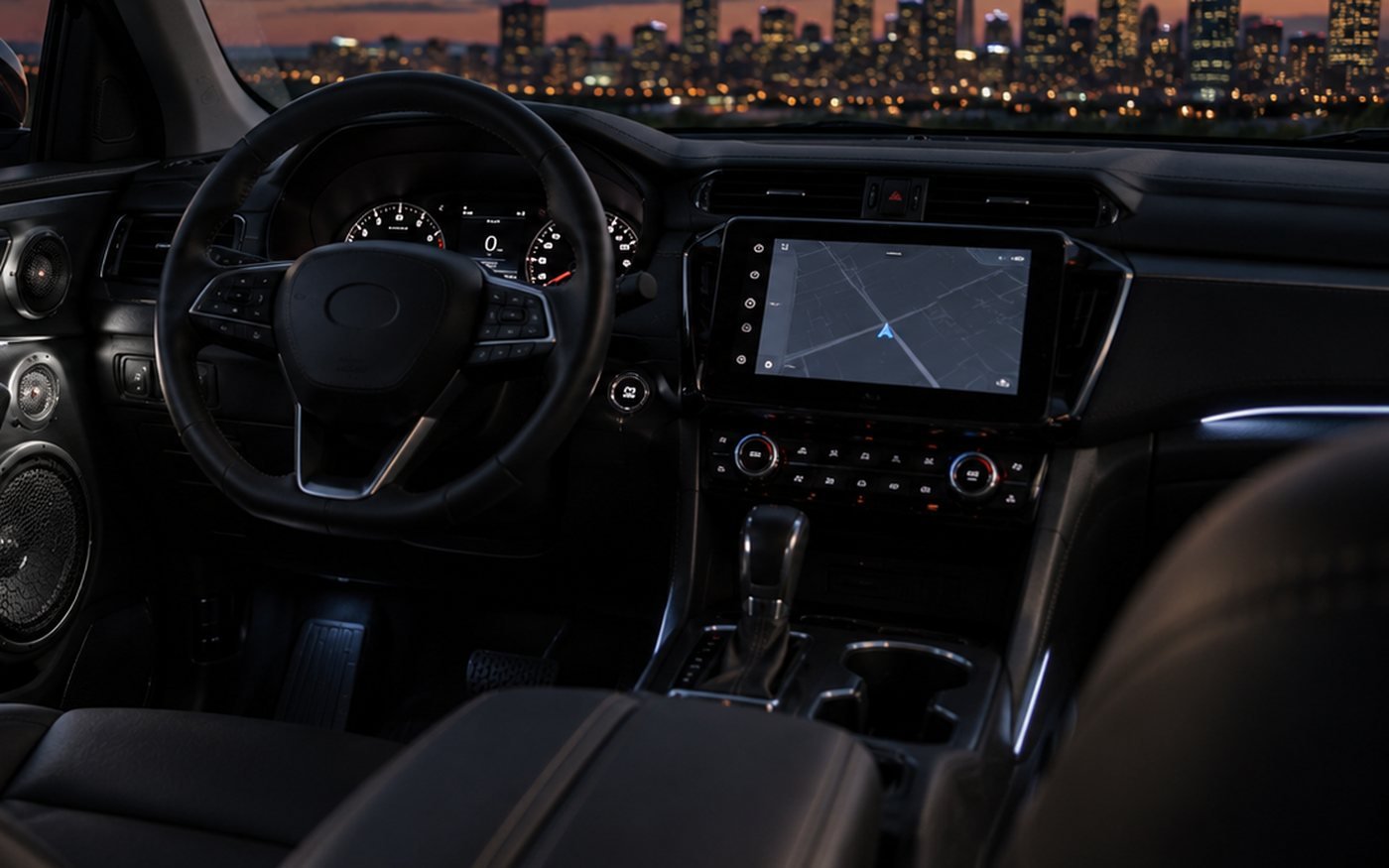
Lighting is the cheapest change that makes a car feel different every time you get in. Done properly it looks like it left the factory that way — even light, no visible strips, no wiring on show.

  • Hidden wiring

    Loomed and secured behind trim. From the seat you see light, not hardware.

  • Vehicle-specific placement

    Where light can go depends on how your interior is built, so it is planned per car.

  • Multi-zone options

    Footwells, doors, dash, console — one zone or several, set up together.

  • Fitted and tested here

    Trim off and back on properly in our northeast Calgary bay, then handed over working.

What this is

The difference is where you cannot see it

Anyone can stick an LED strip under a dashboard and run the cable to a USB socket. It lights up. It also shows the strip, throws a hot spot into your eyeline at night, and leaves a wire hanging where your foot goes.

A proper ambient install is mostly a trim and wiring job. The light source is hidden in a gap or behind a panel so you see the glow rather than the diodes, the run is even from one end to the other, the brightness sits low enough not to distract you while driving, and the power comes from a switched, fused circuit rather than whatever was nearest.

Underneath, all of it is electrical work. Done well you never think about it again. Done badly it flickers, drains the battery, or takes out a fuse on a cold morning — and most of the lighting faults we are called out to are somebody else’s install.

Where light goes

Zones we fit

Most people start with one zone and add more once they have seen it. What is possible on your vehicle depends on how the interior is built.

Footwells

Where most people start — a wash of colour into the front footwells, and usually the rear once they have lived with it. The easiest zone to get looking factory, because the source hides naturally under the dash and seats.

Door panels

A line of light along the door card or into the pull handle. Effective and understated, and the zone that most changes how the cabin reads at night. Placement depends on how the door card is constructed.

Dash and trim accents

Light run into a dash seam or trim gap so the source is out of sight. This is the zone where getting the position right matters most — badly placed dash lighting reflects in the windscreen.

Centre console and cup holders

Console surrounds, cup holders and storage. Small, useful, and the detail people notice when they get in at night.

Boot and cargo area

Practical as much as decorative. Useful on anything you load in the dark.

Starlight headliner

Fibre-optic points set into the headliner. The most involved thing we fit in this category and the one that changes a cabin most — worth a proper conversation about density, pattern and budget before booking.

Zones can be combined and, depending on the system chosen, run together so colour and brightness change across all of them at once.

Integration

It should look like the car came that way

This is the whole difference between ambient lighting and stuck-on LEDs, and it is decided almost entirely before anything is switched on.

What we are working to

  • Using an existing trim gap or seam so the source is concealed
  • Working with how the door card is actually built rather than against it
  • Following the shape of the dashboard so the line looks deliberate
  • Cable concealed behind panels, never crossing an opening
  • Mounting position chosen so light washes a surface rather than pointing at you
  • Even distribution end to end, with no bright spot where the run starts
  • Glare controlled — nothing reflecting in the glass at night
  • Wiring routed clear of moving trim, seat rails and pedals
  • Left serviceable, so trim can come off again without cutting anything

How much of this is achievable is a property of your vehicle. Some interiors have generous seams and hollow door cards and take lighting beautifully. Others have very little to work with, and the honest answer is that a particular zone will not look the way you are imagining.

We would rather tell you that at the quoting stage than fit something you are not happy with. If a zone is going to compromise, we will say so and suggest where the same money is better spent.

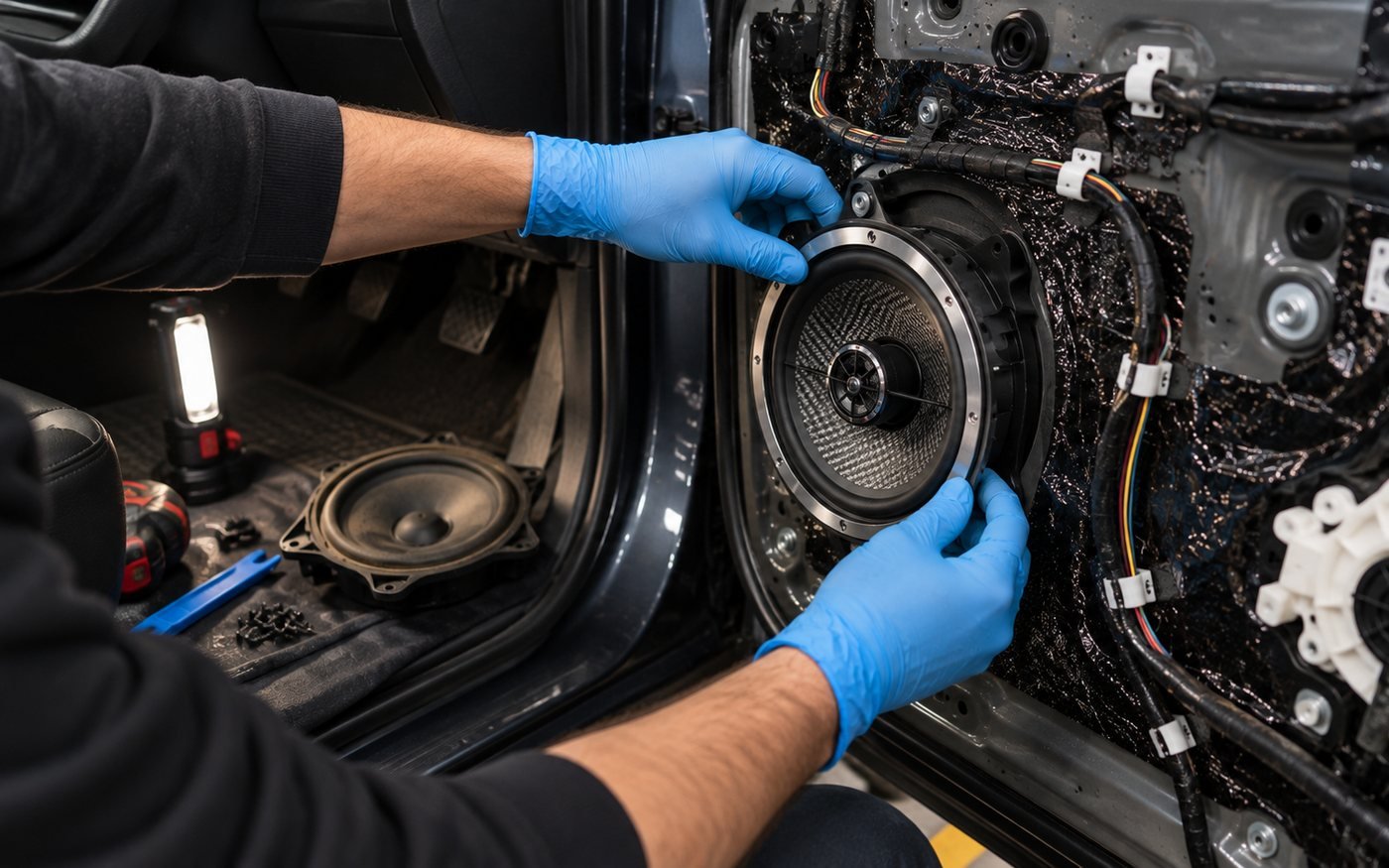
Trim removal on modern interiors is its own skill, and we are not going to publish a guide to taking your door cards off. Panels come off with the right tools and go back without marks, gaps or rattles — that is part of what the labour is for.

Thinking about lighting your interior?

Colour and control

Choosing how it behaves

Most of what we fit is RGB, so the colour is yours to change whenever you like rather than a decision you make once at the counter.

Depending on the lighting system selected, the controls generally available are:

  • Colour. A single fixed colour if you want restraint, or full RGB if you would rather change it with your mood.
  • Brightness. Worth as much as colour. Ambient lighting looks expensive when it is subtle and cheap when it is not.
  • App or remote control. Most systems we fit are controlled from your phone or a supplied remote.
  • Scenes and effects. Saved settings you can switch between, and on some systems animated modes.
  • Zones together or separately. Where the system supports it, several zones can change as one.
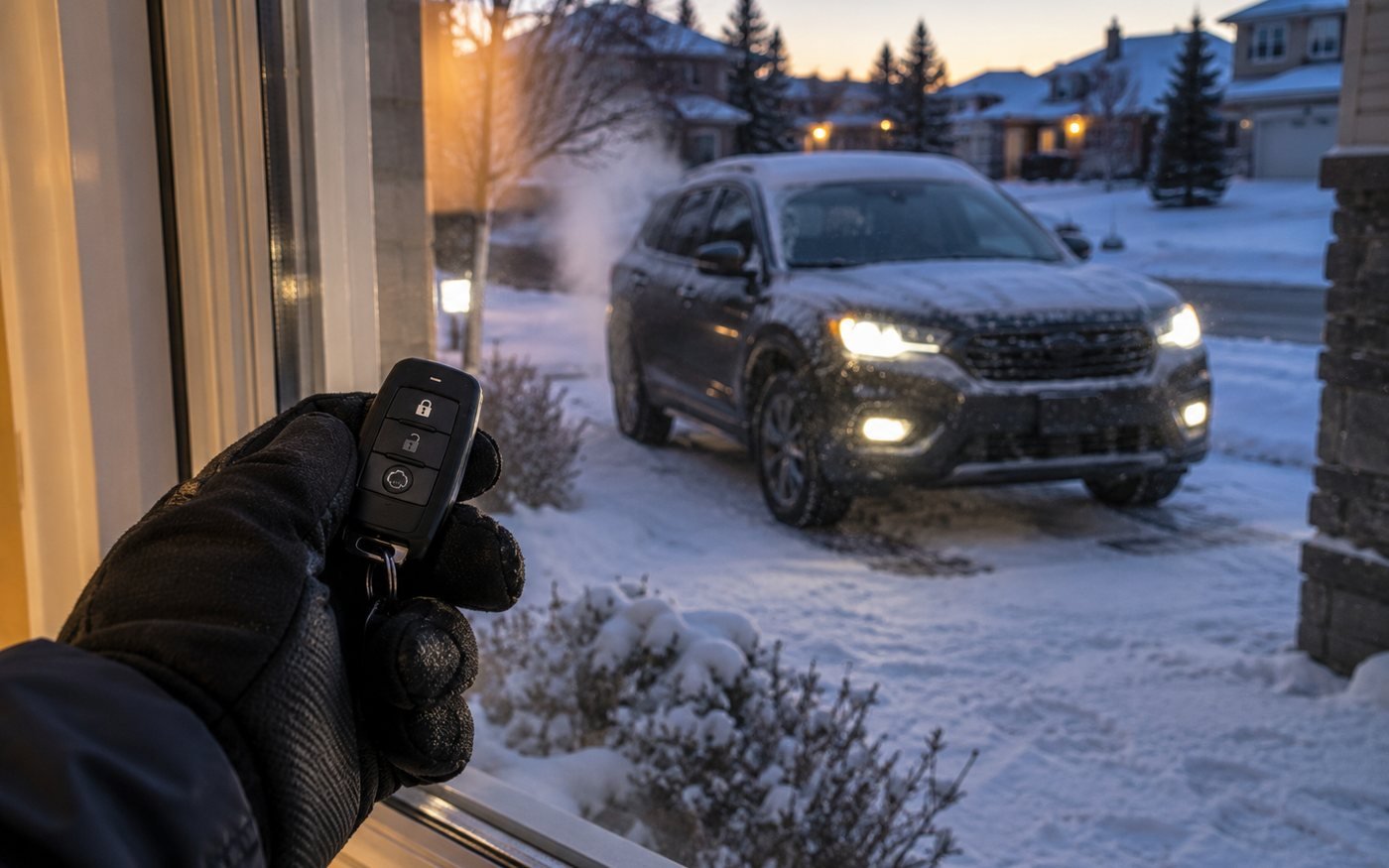
  • Ignition behaviour. We can tie the lighting to the vehicle so it comes up when you unlock and fades out when you leave.

Not every system offers all of these, and the control method is part of what you are choosing when you pick the kit. Tell us how you want it to behave and we will match a system to that rather than the other way round.

Placement

Why the same job differs between two cars

The single biggest factor in what a lighting install costs and how good it looks is the interior it is going into.

Doors

Some door cards have a natural seam or a hollow section that hides a light source perfectly. Others are a single moulded piece with nowhere to conceal anything, which changes both the approach and the time it takes.

Dashboard

Dash lighting lives or dies on position. Too high and it reflects in the windscreen at night; too exposed and you see the source rather than the glow. Where the dash has a trim line to work into, it looks factory.

Console

Usually the most straightforward zone, and often the one that gets used most — cup holders and storage you actually want to see into after dark.

Footwells

Generous space to mount out of sight and a large surface to wash with light, which is why it is the zone most people are happiest with. Wiring has to be routed clear of the pedals and the seat rails.

How much trim has to come apart follows directly from this, and so does the labour. It is why we quote per vehicle rather than by the zone — the same four-door job is not the same amount of work on two different cars.

Starlight headliner

The one that changes a cabin completely

Fibre-optic points set into the headliner, lit from a source hidden out of sight. It is the most involved interior lighting job we do and the one people react to most.

It is worth understanding what it involves before you commit. The headliner comes out of the vehicle, the points are set individually, and it goes back in. That is a substantial amount of careful work, and it is reflected in the price and the time in the bay.

Things worth deciding before we start: how dense you want the points, whether you want an even field or a pattern, whether you want shooting-star effects, and how much of the roof you want covered. These change both the look and the cost significantly, so it is a conversation rather than a checkbox.

Headliner condition matters too. On an older vehicle where the headliner fabric is already sagging, that is worth addressing as part of the same job rather than after.

Exterior accents

Lighting on the outside of the vehicle

Separate from interior ambient work, and a different set of problems — because outside, a Calgary winter finds every shortcut in an install.

  • Underglow. Under the sills and bumpers.
  • Rock lights. In the wheel wells, usually on trucks.
  • Grille and wheel accents. Smaller, more targeted lighting.

Everything outside has to be sealed properly and routed away from heat and road spray, and mounted where it will not be taken off by a snow bank or a curb. That is most of the work — the lighting itself is the easy part.

Two honest notes. We will not fit red or blue facing forward — those read as emergency vehicle lighting and we are not prepared to put them on a vehicle that way. And exterior lighting can be subject to local vehicle-equipment rules depending on colour, placement and how it is used, so it is worth being sure your intended use fits those before fitting. We will talk through what we think is sensible before anything goes on.

How it is wired

The electrical side, which is most of it

Lighting fails for wiring reasons far more often than for lighting reasons. This is the part that decides whether you think about it again.

What the install covers

  • Power taken from an appropriate switched source rather than whatever was nearest
  • Correct fuse protection for the circuit
  • A proper ground, made to a point intended to carry it
  • The load checked against what the circuit can actually take
  • Connections made properly, not twisted and taped
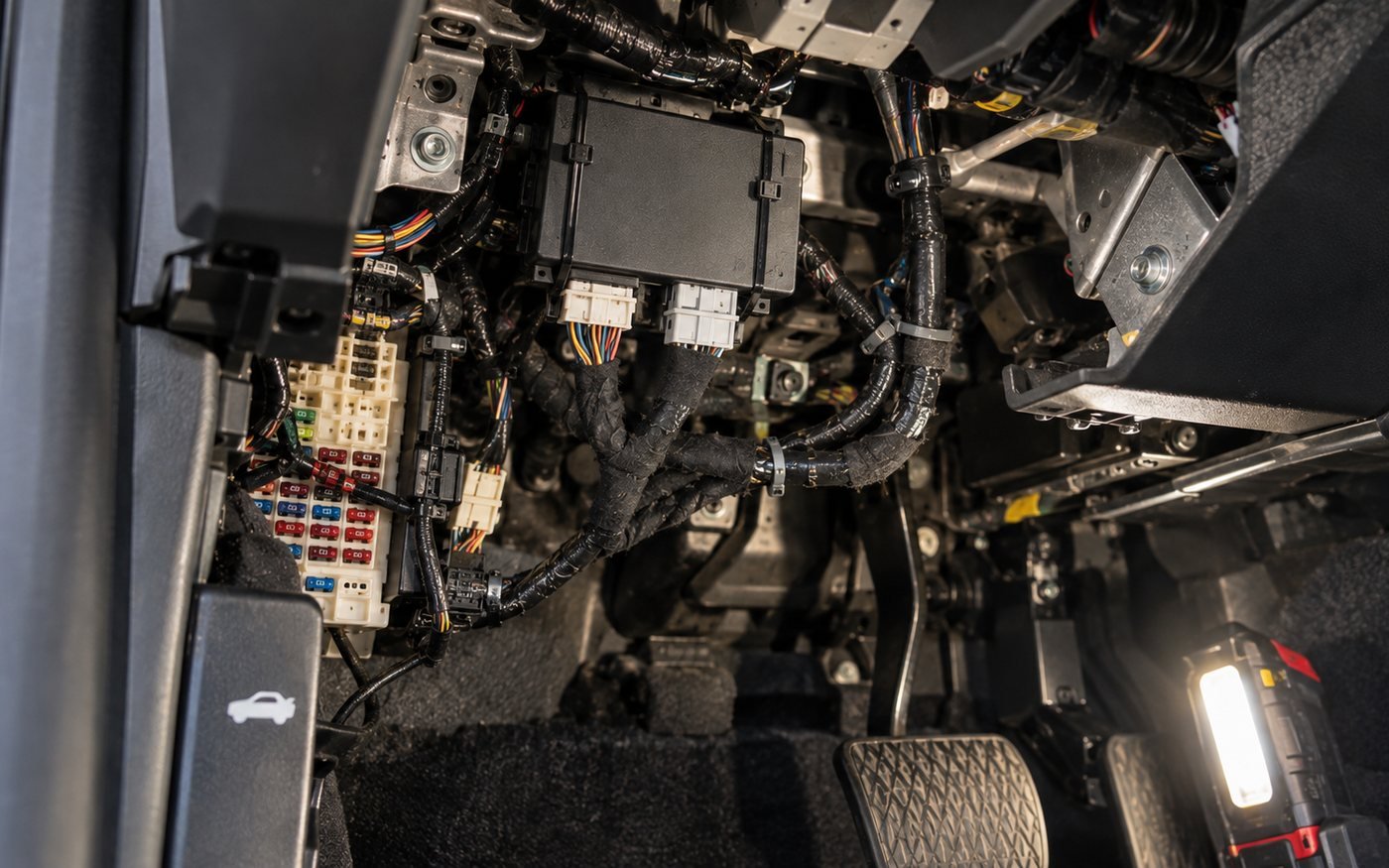
  • Wiring loomed, secured and routed clear of moving trim and pedals
  • Controllers and modules concealed where that is possible
  • Nothing left loose to rattle behind a panel
  • Brightness balanced across zones so no run is brighter than the rest
  • Tested before handover, and you leave knowing how to control it

The load point deserves attention. Adding several zones to a circuit that was never intended to carry them is how a lighting install ends up blowing a fuse on a cold morning, and it is one of the most common faults we find in work done elsewhere.

We also keep the install clear of factory wiring wherever possible, so nothing interferes with systems the vehicle depends on.

As with the trim, we are describing our service rather than publishing a procedure — you will not find vehicle-specific wire colours or tap points on this page.

On the day

How a lighting install goes

Interior review

We look at your actual interior — the door cards, the dash, the console — and tell you which zones will look right on that vehicle and which will not.

Lighting plan

We agree the zones, the system and how you want to control it, and confirm the price before anything comes apart.

Installation

Trim off, light sources concealed, wiring loomed and secured, power taken from a proper fused source, trim back on without marks or rattles.

Testing and handover

Brightness balanced across zones, behaviour checked, and we walk you through the app or remote before you leave.

Open Monday to Saturday, 10:30 a.m. to 6:30 p.m. Time in the bay depends entirely on how many zones and how much trim has to come apart — a single footwell zone and a full multi-zone interior are very different jobs. Lighting is often done alongside other work while the trim is already off, which saves paying for the same disassembly twice.

Why it matters who fits it

Where lighting installs go wrong

Rewiring somebody else’s lighting is a regular job for us, and the same faults come back repeatedly.

Visible sources

The strip mounted where you can see the diodes rather than the glow. Once you have noticed it you cannot stop noticing it.

Spliced into anything nearby

A run fed from whatever wire was closest, on a circuit never meant to carry it. This is the one that blows fuses.

Loose wiring and rattles

Cable left unsecured behind a panel, buzzing over every expansion joint. Cheap to avoid, irritating to live with.

Uneven or glaring light

One zone brighter than the rest, a hot spot at the start of a run, or dash lighting reflecting in the windscreen at night.

If you have lighting that flickers, drops out or keeps taking a fuse, bring it in. We will tell you whether it is worth rewiring what is there or starting again.

Questions

Lighting questions we get asked

How much does ambient lighting cost?

It depends on how many zones you want and how much trim has to come apart to fit them, and that varies a lot between vehicles. Tell us what you are picturing and which car it is going in, and we will quote it before any work starts.

Can it be made to look factory rather than aftermarket?

That is the whole aim. The light source goes into a trim gap or behind a panel so you see the glow and not the strip, the run is even, and the brightness is set low enough to look designed rather than added. How close we get depends on what your interior gives us to work with, and we will tell you honestly at the quoting stage.

Can I change the colour?

On most of what we fit, yes — RGB with colour, brightness and effects, controlled from your phone or a remote. If you would rather have one fixed colour and never think about it, that is also a perfectly good answer.

Will I see any wires?

You should not. Cable is loomed and run behind trim, and controllers are concealed where the vehicle allows it. If a particular vehicle will not allow something to be fully hidden, we will tell you before we fit it rather than after.

Will it drain my battery or blow a fuse?

Not when it is wired to an appropriate switched circuit with the right fuse and the load checked against what that circuit can carry. Most lighting problems we are called about are installs where that was not done.

Can I have several areas lit and control them together?

Yes, depending on the system chosen. Zones can be run together so colour and brightness change across all of them at once, or kept separate if you would rather.

Does every car take the same amount of work?

No, and this is the main reason two quotes differ. Some interiors have seams and hollow panels that hide a light source easily; others need far more disassembly for the same result. The vehicle drives the labour.

What is involved in a starlight headliner?

The headliner comes out, fibre-optic points are set into it individually, and it goes back in. It is the most involved interior lighting job we do. Density, pattern and coverage all change the cost, so it is worth a proper conversation first.

Can you fix lighting someone else installed?

Yes, and it is a regular job. Rewiring a bad install properly is often better value than replacing the lighting itself.

Can lighting be fitted at the same time as other work?

It usually should be. If trim is already coming off for speakers, a head unit or a starter, adding lighting at the same visit avoids paying for the same disassembly twice.

Tell us about your vehicle

Send the details and we will come back with a price for your vehicle. No call centre, no generic quote.

Tell us what you are picturing

Send us the year, make and model, which areas you want lit, and whether you want to change colours or set it once and leave it. We will tell you what will look right on your interior and confirm the price before anything comes apart.

#129 10985 38 St NE, Calgary AB T3N 1Z2 · Monday to Saturday, 10:30 a.m.–6:30 p.m.