Headlights and vehicle lighting

Headlight upgrades in Calgary

If your headlights are dim, yellow, or still the original halogens, an upgrade is one of the biggest safety improvements you can make to an older vehicle. It is also one of the most commonly done badly — and a bright bulb in the wrong housing makes seeing worse, not better.

  • Vehicle-specific fitment

    Checked against your actual housing and bulb size before anything is ordered.

  • Beam pattern first

    Where the light goes matters more than how much of it there is.

  • Electrical compatibility

    Bulb-out warnings, flicker and hyper-flashing dealt with rather than ignored.

  • We will tell you no

    If your vehicle will not take a decent LED cleanly, we say so instead of selling you one.

What this is

It is not just changing a bulb

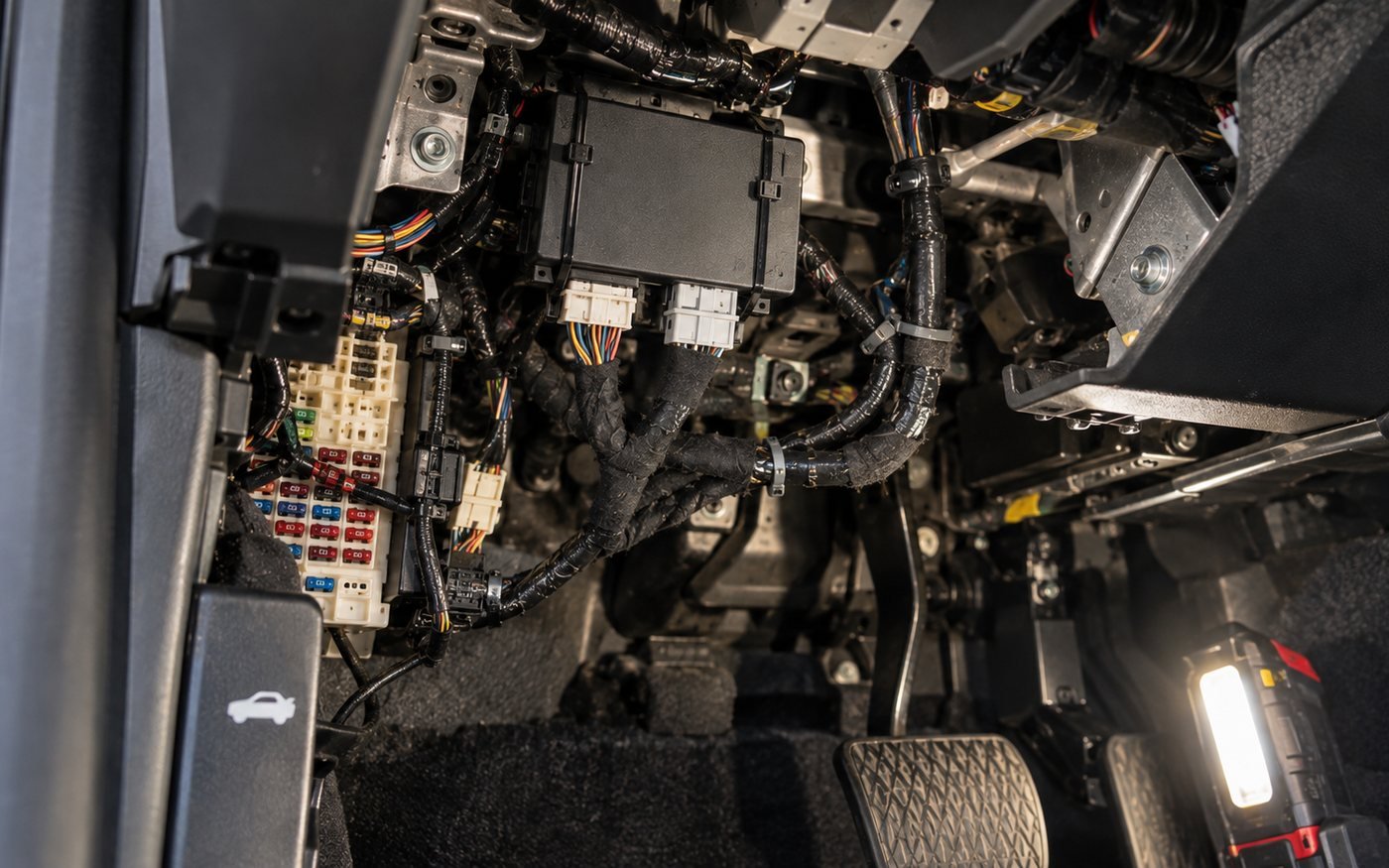
A headlight is a system: a light source, a housing designed around a specific kind of source, and a vehicle that may be watching the circuit. Change one part without considering the other two and you can end up worse off than you started.

The most common version of this is a bright LED bulb dropped into a housing that was designed for a halogen filament. It looks impressive from outside the car. From the driver’s seat the light is scattered rather than placed, the useful distance down the road can actually shorten, and oncoming drivers get glare.

What we do is check the pieces fit together before anything is fitted: the housing type, the bulb size, the physical space behind the lamp, and how your vehicle monitors its lighting circuits. Then, if it is a good match, we fit it properly.

And if it is not a good match, we will tell you that. Some vehicles simply will not take an LED conversion without the beam going everywhere, and on those you are better leaving the halogens alone or looking at a quality halogen bulb instead.

What we fit

Lighting work at the shop

Functional vehicle lighting — the lamps that help you see and help other people see you.

LED headlight upgrades

The most common request. Suitability depends on your housing and bulb size, which is the first thing we check rather than the last.

HID conversions

Also fitted where they suit the vehicle. Same principle applies — the housing has to work with the source.

Replacement bulbs

Common sizes including H7, H11, 9005 and 9006 among others. Sometimes the right answer is simply a better bulb of the type your car was built for.

Fog lights

Fog lamp bulbs and upgrades. Fitment varies more between vehicles here than people expect.

Halo and angel eye rings

Accent rings in the headlamp assembly. Whether it is practical depends on the housing and how the lamp is built.

LED tail and brake lights

Rear lighting upgrades, with the same compatibility questions as the front — and more of them, because rear lamps are commonly monitored.

Send us the year, make and model and what you are trying to improve, and we will tell you which of these actually applies to your vehicle.

Beam pattern

Where the light goes beats how much there is

This is the single most misunderstood thing about headlight upgrades, and the reason so many of them disappoint.

What actually decides performance

  • Beam distribution. Light spread usefully along the road rather than thrown everywhere at once
  • The cutoff. A defined upper edge that puts light on the road and keeps it out of oncoming eyes
  • Glare. Scattered light that blinds other drivers, and reflects back at you off snow and wet road
  • Housing design. A projector focuses through a lens; a reflector bounces light off a shaped bowl. They behave very differently
  • Source position. A halogen filament and an LED emitter sit in different places and emit differently — the housing was designed around one of them
  • Aim. Checked, and adjusted where the assembly allows it

The short version: a housing is an optical instrument built around one specific kind of light source. Put a different source in it and the optics no longer do what they were designed to do. The bulb can be far brighter and the result still worse.

This is why two vehicles given the same bulb can get completely different results, and why a kit that transformed your friend’s truck may be a poor idea on your car. It is also why we check the housing before recommending anything.

On glare specifically: it is not only a courtesy issue. Light thrown above the cutoff scatters off falling snow, wet road and windscreen grime, which reduces what you can see. Getting the pattern right is a self-interested decision as much as a considerate one.

Not sure what your vehicle will take?

Halogen to LED

Whether yours is a good candidate

There is no universal answer and no such thing as a bulb that suits every car. What decides it on your vehicle:

  • The headlight housing. The single biggest factor, and the first thing we look at.
  • Projector or reflector. Projector housings are generally more forgiving of an LED source. Reflectors are much fussier, because the bowl was shaped around a filament in a precise position.
  • Bulb size. H7, H11, 9005, 9006 and the rest — which one your vehicle uses determines what is even available.
  • Space behind the lamp. LED bulbs have a driver and a heatsink or fan behind the base. Some engine bays simply do not have the room.
  • Cooling. LEDs need somewhere for heat to go. A bulb crammed into a sealed space will not last.
  • Dust-cap clearance. The rear cover has to go back on properly. If it will not, the housing is open to moisture.
  • Your electrical system. Whether the vehicle monitors that circuit, and how it reacts to a different load.

Plug-and-play is a marketing phrase, not a specification. Some vehicles genuinely are; plenty are not. We check yours before recommending anything, and if the honest answer is that a good halogen bulb will serve you better, that is what we will say.

HID and xenon

Where HID fits in

We fit HID conversions where they suit the vehicle. The same rule applies as with LED: the housing has to work with the source, and a projector housing is generally the better home for one.

An HID system is more than a bulb — there are additional components involved in starting and running the lamp, and they need somewhere sensible to be mounted and a sound electrical feed. That is part of what the installation covers.

Colour is worth a word. Very blue or purple output looks dramatic and generally produces less usable light on the road than a cleaner white. We will steer you toward the output that actually helps you see rather than the one that looks most striking in a car park, and explain the trade-off rather than just taking the order.

If your vehicle came with factory HID or xenon lighting from new and something has stopped working, tell us that when you call. Diagnosing a factory system is a different job from fitting a conversion, and it should be diagnosed before any part is replaced — the fault is not always the bulb. We will confirm what we can do for your specific vehicle before you book it in.

Vehicle compatibility

Bulb warnings, flicker and hyper-flashing

These are the problems that catch people who buy a kit online and fit it themselves, and they are the reason a lot of LED upgrades come back out again.

Many modern vehicles watch their lighting circuits. The car expects a certain electrical behaviour from a bulb, and an LED behaves differently — it draws far less, and it switches differently. When the vehicle notices, you get symptoms:

  • A bulb-out warning on the dash for a lamp that is working perfectly well.
  • Flicker, especially at idle or with the engine off.
  • Lights switching themselves off after a short time.
  • Pulsing or strobing rather than steady output.
  • Hyper-flashing — indicators flashing at double speed, which is the vehicle telling you it thinks a bulb has failed.
  • Inconsistent operation that comes and goes with temperature or engine state.

None of this means the lamp is faulty. It means the vehicle and the bulb are not speaking the same language. Depending on the car, the answer is a component designed to be compatible with that monitoring, or vehicle-specific integration — and on some vehicles the honest answer is that a particular conversion is not worth the trouble.

We deal with this as part of the job rather than handing the car back with a warning light on. What we will not do is publish the workarounds — no component values, wire colours, coding steps or bypass wiring on a public page. Ask us about your vehicle and we will tell you what it needs.

Other lamps

Fog, accent and rear lighting

Headlights are the bulk of this work, but they are not all of it.

Fog lights

Bulbs and upgrades for the fog lamps your vehicle already has. Fitment varies a lot between models, and the housing matters here as much as it does up top. Output and colour should suit what a fog lamp is for — a low, wide spread — rather than being chosen for maximum brightness. Aim is checked where the assembly allows it.

Halo and angel eye rings

Accent rings within the headlamp assembly. Whether it is practical depends entirely on how your lamp is built, and some installations mean opening the assembly — which is a considered decision, not a quick add-on. We will tell you which category yours falls into before you commit.

Tail and brake lights

Rear LED upgrades. Bulb type has to be right, and rear lamps are commonly monitored, so the compatibility questions from the previous section apply here too — often more so.

One thing we will not do: change how your vehicle’s required signalling behaves, or disable a warning to make a mismatched bulb appear to work. Brake and indicator lamps have to do what other drivers expect them to do.

A fog lamp is also not a driving lamp. Upgrading fog lights improves the fog lights — it is not a substitute for headlights that are past their best.

Not working?

A dead headlight is not always a dead bulb

Before replacing anything, it is worth knowing what actually failed. A bulb is the most likely cause and the cheapest, but it is not the only one.

  • The bulb. Most common, and the first thing checked.
  • The connector. Heat and moisture at the back of a headlamp take their toll, and a corroded or melted connector is a frequent find.
  • A fuse or the circuit. Worth establishing whether power is reaching the lamp at all.
  • The ground. A poor ground produces dim, flickering or intermittent lighting that looks exactly like a failing bulb.
  • Additional components, where the system has them — relevant on HID and on some LED systems.
  • Wiring. Chafed, corroded or damaged, particularly on an older vehicle.
  • A control module or switching fault. Less common, but it happens.

Testing tells you which, and it is cheaper than replacing parts in sequence hoping one of them was it. If yours is behaving oddly rather than simply dead — dim, flickering, intermittent, or working only sometimes — that points at the supply side, and it is an auto electrical job as much as a lighting one.

On the day

How a lighting job goes

Vehicle and lamp check

We look at the actual housing, the bulb size, the space behind the lamp and how your vehicle monitors the circuit.

Fitment recommendation

What will genuinely work on your car — including telling you when the answer is to leave it alone or fit a better bulb of the original type. Price confirmed before we start.

Installation and integration

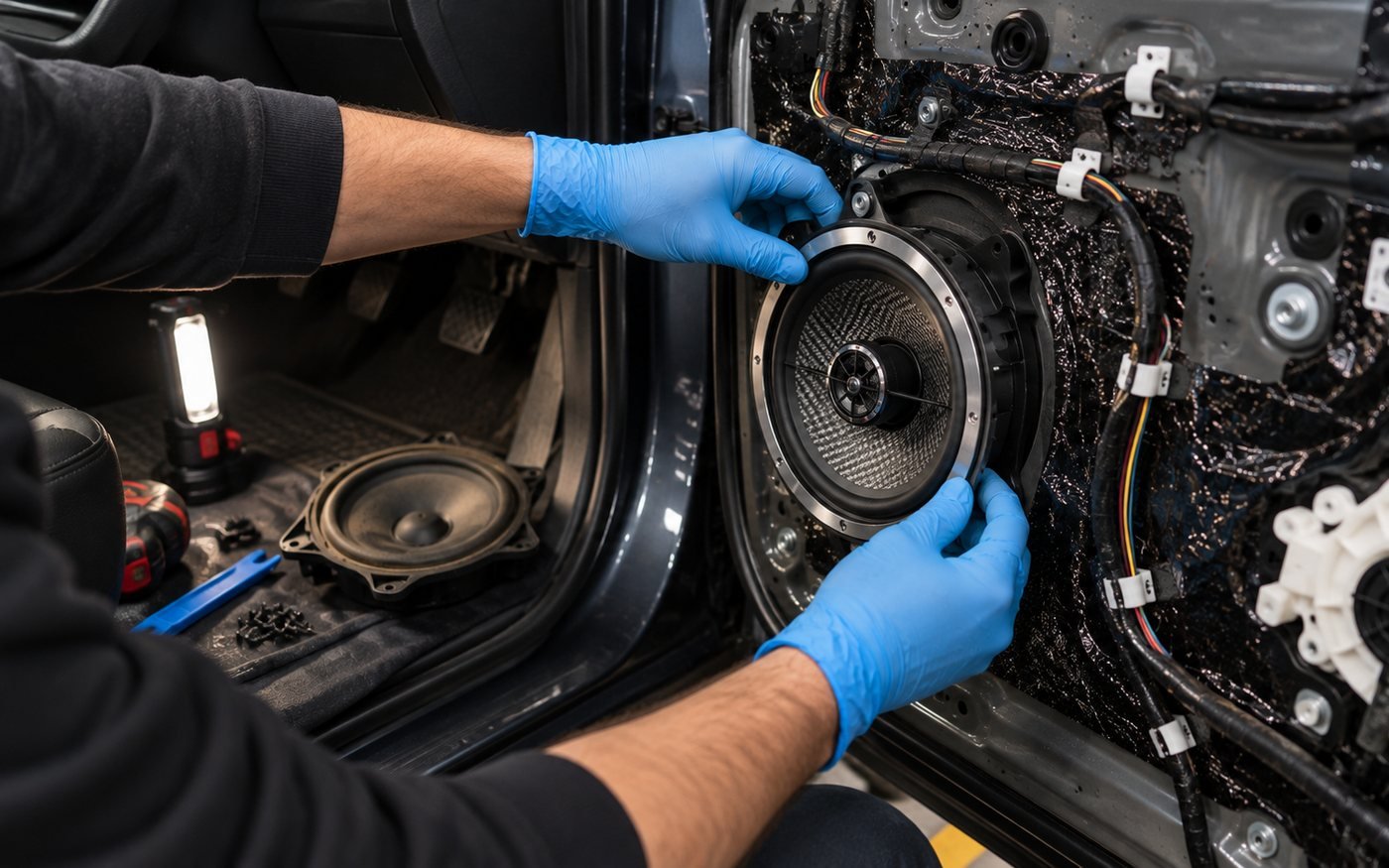
Fitted and mounted securely, with any compatibility components needed so the vehicle is happy with the change.

Testing and aim

Checked for warnings and flicker, output confirmed, and aim checked and adjusted where the assembly allows it.

Open Monday to Saturday, 10:30 a.m. to 6:30 p.m. Time in the bay depends on the vehicle — some lamps are accessible in minutes, others need the bumper or the liner out of the way first.

Why it matters who fits it

What goes wrong with online kits

We see the aftermath often enough to know the pattern. None of it is the customer’s fault — the listings do not mention any of this.

Wrong housing for the source

Bright bulb, scattered beam. Looks powerful from outside the car, performs worse from the driver’s seat.

Warnings and flicker

The dash lights up, or the lamps pulse and cut out, because the vehicle is monitoring a circuit that now behaves differently.

Heat and moisture

No room for the heatsink, or a dust cap that will no longer seat. Either shortens the life of the bulb, the housing, or both.

Loose or improvised mounting

Drivers and ballasts cable-tied wherever they fit, working loose over a winter of frost heaves.

If you have already fitted something and it is not behaving, bring it in. Often the components are fine and the problem is compatibility or mounting — and we will tell you honestly whether it is worth correcting or worth going back to what the car came with.

Questions

Headlight questions we get asked

Can I upgrade my halogen headlights to LED?

Often, but not always well. It depends on your housing, the bulb size, the space behind the lamp and how your vehicle monitors the circuit. Send us the year, make and model and we will tell you whether yours will give a clean beam pattern or whether you are better leaving it alone.

Will an LED bulb work properly in my existing housing?

That is the real question, and it is not the same as whether it physically fits. A housing is built around one type of light source. Projector housings are generally more forgiving; reflectors are fussier because the bowl was shaped around a filament in a precise position. We check yours before recommending anything.

Why does beam pattern matter more than brightness?

Because a headlight’s job is putting light in the right place, not producing the most of it. Light thrown above the cutoff glares at oncoming drivers and scatters off snow, rain and windscreen grime — which reduces what you can see as well. A well-patterned beam usually out-performs a brighter, messier one.

Will I get a bulb-out warning on the dash?

On some vehicles, yes, if the wrong components are used. The car expects a certain electrical behaviour and an LED behaves differently. Depending on the vehicle it needs compatible components or vehicle-specific integration, and we handle that as part of the job rather than handing the car back with a warning light on.

Why do some cars flicker after an LED is fitted?

Same root cause as the warning light — the vehicle is monitoring the circuit and the new bulb does not present the way the old one did. It is usually solvable, and occasionally it is a sign that particular conversion is not worth pursuing on that vehicle.

Can a cheap LED conversion make my visibility worse?

Yes, and this is worth taking seriously. A bright source in a housing that cannot control it spreads light everywhere instead of down the road, and the glare comes back at you off wet or snowy surfaces. Brighter is not automatically better.

Can you upgrade my fog lights?

Yes. Fitment varies more between vehicles than most people expect, and the output should suit what a fog lamp does — a low, wide spread — rather than being chosen for maximum brightness.

Can you add halo or angel eye rings?

Depending on how your headlamp assembly is built. Some are straightforward; some require opening the assembly, which is a bigger decision. We will tell you which yours is before you commit to it.

Can you upgrade tail and brake lights?

Yes. Bulb type has to be right and rear lamps are commonly monitored, so compatibility matters at least as much as at the front. We will not alter how your required signalling behaves or disable a warning to make a mismatched bulb look like it works.

Is an LED or HID conversion road legal?

We are not the right people to give you a legal opinion, and we will not pretend otherwise. Lighting modifications may be subject to vehicle-equipment rules depending on the lamp, its colour, its placement and how it is used, so it is worth being satisfied your intended use fits those. What we will do is fit things that produce a proper beam pattern and tell you plainly when something is a bad idea.

How much does it cost?

It is quoted per vehicle. The price follows your car, the type of system, the housing, how hard the lamp is to get at, whether compatibility components are needed, how many lamps are involved and whether any diagnosis is required first. We confirm the figure before starting.

Tell us what you drive and what you want to fix

Send us the year, make and model, and whether the problem is that your headlights are too dim, too yellow, or have stopped working altogether. We will tell you what your vehicle will actually take — including when the honest answer is to leave them as they are.

#129 10985 38 St NE, Calgary AB T3N 1Z2 · Monday to Saturday, 10:30 a.m.–6:30 p.m.